Regional organisations
Regional organisations are blocs of African countries. They provide the institutional basis for regional integration, allowing countries to work together on issues that transcend national borders, including trade. Regional organisations help coordinate policies and facilitate the movement of goods, services and people across borders. Beyond the African Union, the largest regional organisation, Africa is home to a large number of regional organisations and trade agreements. This makes the overall system more complex and raises coordination issues.

Resources on regional organisations
A missed opportunity for regionalism: the disparate behaviour of African countries in the EPA-negotiations with the EU
By Sebastian Krapohl for Journal of European Integration.
01 September 2019

The political economy of Africa’s regional ‘spaghetti bowl’ – Synthesis report
This report synthesises the findings of a two-year research project on the political economy dynamics of regional organisations (PEDRO). It aims to explain why African countries join multiple, often overlapping, regional organisations despite the complications this ‘spaghetti bowl’ of agreements creates; and what drives and constrains the regional agendas and processes of these organisations.


27 May 2019
Nigeria and South Africa: Shaping prospects for the African Continental Free Trade Area
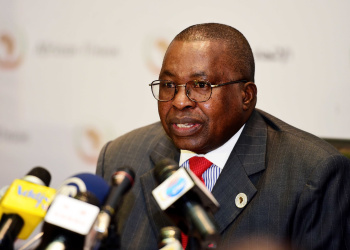
This paper analyses the political economy of trade policymaking in Africa’s two largest economies, Nigeria (which has not signed the AfCFTA Agreement) and South Africa (which belatedly signed), to better understand how domestic dynamics influence the way these two countries engage with the AfCFTA.

11 February 2019

Financing the African Union – on mindsets and money
With 55 member countries, an elaborate institutional architecture, a broad policy agenda, and a high dependency rate on its former colonisers and main donors, the African Union (AU) is probably the world’s largest and most complex regional partnership configuration.
04 February 2019
AU migration governance: non-aligned views on migration governance in Africa
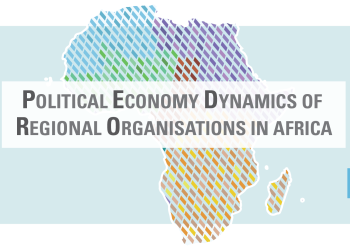
What blocks or drives regional integration in Africa? And what role do regional organisations play in this? To answer these questions, we have dug deeper into the political economy dynamics of 17 regional organisations in Africa. This policy brief analyses the approaches of the African Union (AU) and national level stakeholders to migration governance and related challenges.

04 December 2017
The African Union: How to become fit for purpose?
What blocks or drives regional integration in Africa? And what role do regional organisations play in this? To answer these questions, we have dug deeper into the political economy dynamics of 17 regional organisations in Africa.
04 December 2017
Combating unjustified sanitary and phytosanitary measures in the African tripartite free trade area (SADC–EAC–COMESA): SPS-Plus or SPS-Minus?
By Harrison Otieno Mbori for Hungarian Journal of Legal Studies.
01 December 2017
A handbook on Regional Integration in Africa: Towards agenda 2063
By Brendan Vickers for The Commonwealth.
16 March 2017
Modelling the economic impact of the tripartite free trade area: Its implications for the economic geography of Southern, Eastern and Northern Africa
By Andrew Mold and Rodgers Mukwaya for Journal of African Trade.
01 December 2016
A ‘how to’ note: Doing regional development differently – A political economy analysis framework for identifying drivers and constraints to regional integration
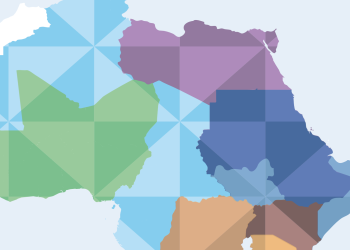
ECDPM’s five-lens framework is a way to systematically examine how foundational factors, institutions, sector characteristics and external factors influence and shape the roles and interests of different key actors and stakeholders in pursuing regional objectives. This how-to note summarises the key features of the tool and specifically suggests the questions that practitioners should ask when looking at engaging in regional processes.
18 November 2016